Strategy & Tactics
Eight Counters
MediumTake-away strategy · A few rules to read
Useful knowledge: Counting up to eight.
Choose a first move that wins a small game even when your opponent responds carefully.
The challenge
There are eight counters in one pile. You and an opponent alternate turns; you go first.
On each turn a player must remove either one or two counters, without taking more than remain. The player who takes the last counter wins. There are no passes or other moves.
What first move guarantees that you can win against any legal responses, and how should you respond afterwards?
Need a hint?
Start with Hint 1. Open another only if you want more help.
Hint 1
With three counters left, a player must take one or two. How many would that leave for the other player?
Hint 2
Can you leave six, then three, then zero counters after your own turns?
Print this puzzle · Separate answer sheet
Show Answer
Answer
Take two counters first. Then make each opponent-turn and your following turn remove three counters in total.
Explanation
Take two to leave six. If your opponent takes one, take two. If your opponent takes two, take one. Each pair of turns removes three counters, leaving three after your next turn and zero after your final turn. You take the last counter.
You can always make this reply. Your opponent starts a turn with six or three counters and can take at most two. That leaves enough for you to bring the total taken over both turns to three.
Taking only one at the start leaves seven. A careful opponent can take one to leave six for you, then use the same reply strategy against you. Thus two is the only winning first move when both players choose well.
Original puzzle
Keep exploring
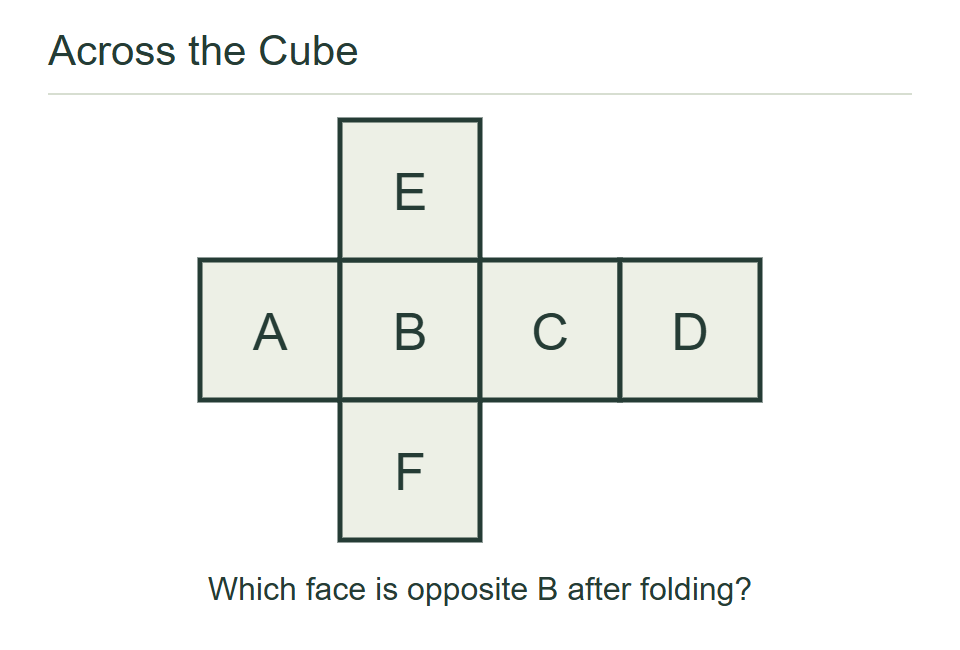
Across the Cube
Imagine folding six flat squares into a cube. Use the letter labels to find the face opposite B.
Five Boxes, Two Truths
Compare five claims and find the only key location that makes exactly two true.
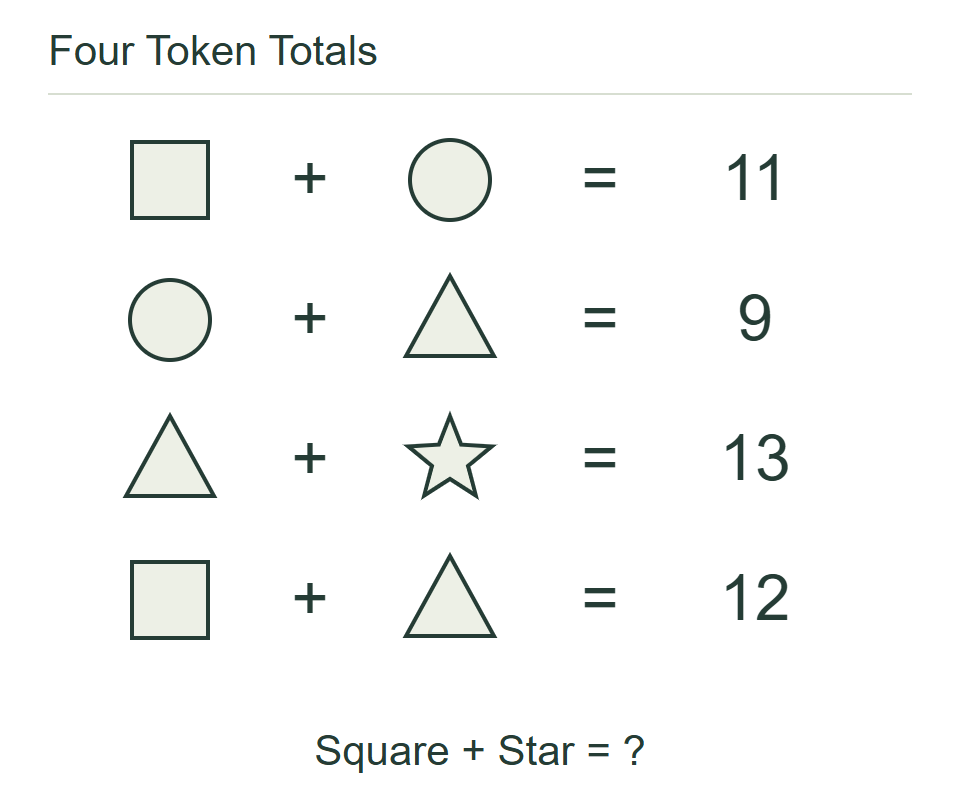
Four Token Totals
Each shape stands for a number. Combine the clues to find a total without working out every shape first.
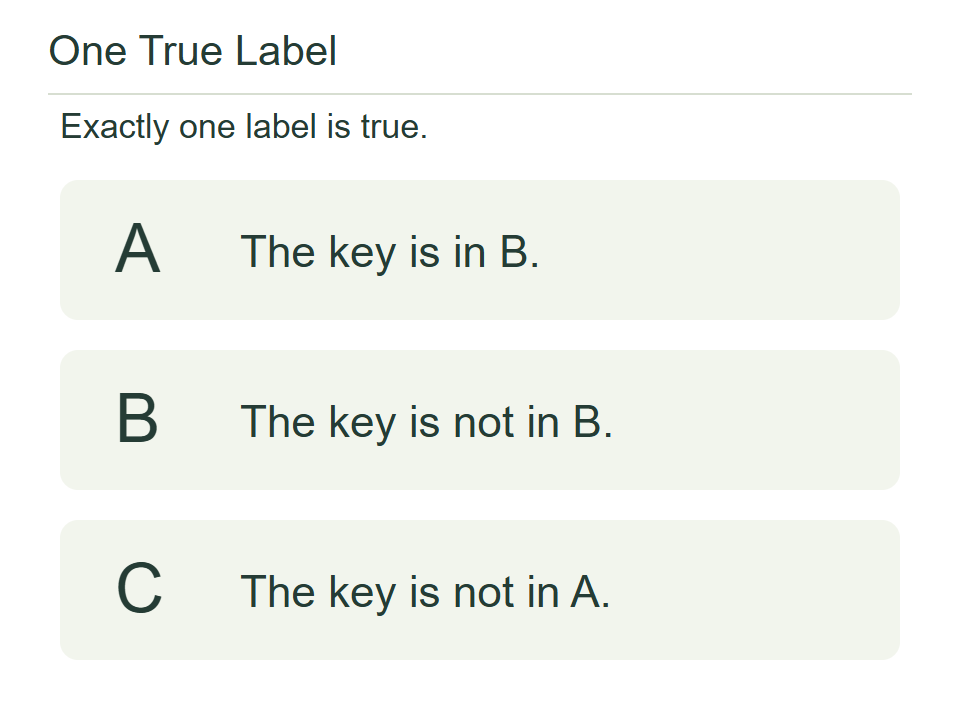
One True Label
Three boxes make three claims. Use the one truthful label to locate a hidden key.